Coyote

“The coyotes roamed the edges of the neighborhood at dawn and dusk, big eared, serene, drawn tight as bow strings. Coyotes love to trick domestic dogs, to play with them and draw them away from their yard and out into the hills, where they then set upon them as a pack, kill and eat them.”

–Cameron Mackenzie, Cutbank Weekly Flash Prose

The heat pump register bangs, laboring to filter and deliver warm air against condensing fog, heavy morning mist. It may burn off by noon, or not at all. Sometimes we don’t see the sky for days, with rain and fog and full-spectrum gray from dove to doe. Sink down in the loam like locust backing into the earth to wait. Dread, over the left shoulder and behind, yet looming ahead.

This is not the season for the hopeful. They come in the summer, go to school, fall in love, find a job, and stay. When the light drains away and freezing fog fills the valley for days, they ask how long it will last. When a far line of sight is blocked, the only view is inward down to the bone.

I once hired a brilliant network engineer named Jonathan. He moved here from the mid-west with his girlfriend after she was accepted into a graduate program. Get the best rain gear you can afford, I advised, walk outside every day; get candles if you don’t have a fireplace, grind spices for tea and bathe in the vapor. Jonathan lasted until early December. He apologized, and I argued, but he had to leave he said, else he would hang himself.

Solace of apples, perhaps the same alchemy that extracts antivenin from venom, the honeycrisp as cure. Core and chop the fruit to simmer down to chunky sauce, spike with cinnamon and nutmeg. Heat a cup of amontillado to a near-boil and soak red flame raisins to plump. Mix a muffin batter with applesauce and raisins. Give away the batch to those who politely refused the crisp imperfect apples from the tree.

Temporary measures, taken in sequence, become strategy.


Sunset

tiger_nasturs_flower

“I leave a white and turbid wake; pale waters, paler cheeks, where’er I sail. The envious billows sidelong swell to whelm my track; let them; but first I pass.”

–Herman Melville, Moby Dick

Rain rips the red leaves from the dogwood and whips waves of gold down from the birch. A frost last week, though not hard and certain, was enough warning to corral the potted citrus and thorny bougainvillea inside for the season. Crushing acorns underfoot as we walk the trails, a year in the making. The crows pick the meat from the shells and the dog charges the squirrels when we return. Shed.

Houses in the old neighborhood are decorated for Halloween. It seems it’s always been this way, this casting and passing, this litter of leaves.  Dad’s ginger dog Ben and I walk down to the park. We pass lawns decked out with styrofoam tombstones, trees dangling plastic pumpkins lit by violet eyes. These are wards, I know, talismans strung on each threshold to forestall unfriendly spirits, effective even if purchased at a box store. After the cross-quarter, such magic, no longer needed, will be assigned to the trash. But the warding is sincere. Darkness gathering in the north, we walk on.


Bridges

morse_bridge.png

The dog won’t cross bridges. She prefers to swim. A bridge is a different sort of crossroad. There might be trolls.

Once we hiked down the Ridgeline Trail, descending the grade to the footbridge over Amazon Creek marking the end of the spur, and Mercy refused to cross. She braced her feet like a donkey unmoved by sticks or carrots. The draw was steep and filled with brambles. I finally unleashed her and walked across. She watched me from the other side, stutter-stepping and complaining while I waited. With much rocking back-and-forth to test her mark, she eventually sprinted across the short span and took my arm in her jaws all reproachful at my betrayal.

We don’t go up to the Ridgeline much any more, not only because of bridge logistics, but because of my persistent prickling certainty we are being watched. Mercy might be willing to tangle with a cougar, but I am not. Or perhaps more truthfully, there is no doubt the dog can outrun me.

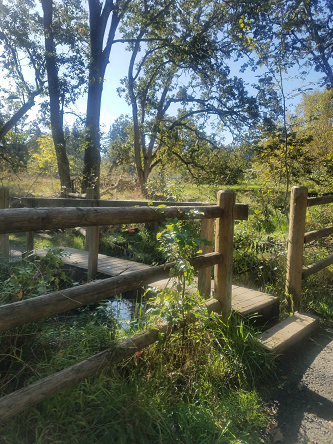
There is one wooden bridge she crosses readily, perfectly content to parade back and forth across, tucked along the trails among oak savanna at Morse Ranch. Today she happily leapt off the bridge down into the stream and returned after plowing through the water several turns. We met a little man there once, sitting and dangling his feet over the water, with a long ginger beard and a red hood. He tickled Mercy and let her kiss his mustache. If he whispered in her ear, I did not hear. A dog knows things.

It’s autumn, that time of year when the squirrels go squirrely, darting across a road before abruptly deciding to double back, only to freeze in place. It’s a pre-winter thinning of the squirrel population, I suppose, when the most fickle finally end up smashed in the road for crow food. A cyclist was killed when a squirrel leapt into the spokes of his front tire and he was thrown over the handlebars.

Beware of squirrels and trolls who boast of  “great and unmatched wisdom.

morse_home

Equinox

equinox_seeds

The last cucumber plucked, tomato plants pulled, hops and squash cut, seeds spread to dry. The wild turkeys feed on windfall apples and pears along the neighborhood streets, neglected imperfect fruit delicious in its fermenting, and strut into traffic. Days are shorter now. From raw harvest to measure, the Scales turn downward.

Rain came, early; the end of summer underlined by lightning, as if there might be any mistaking the change of season.

Thunder and roiling rising cloud armadas duel and pitch with cannon. A strike fried the wifi router and blew circuits, sent the dog under the bed, and me below deck away from the barrage on the southern windows.

Balance is never struck. I wonder at the phrase. Balance is a momentary pose found in vigilance and constant mediation, an asana of breath and intention. Was there ever a time of perfection? Sitting out on the cider house deck at sunset laughing while a train whistle blows in the distance. Perhaps. The moment dissolves into new tableau. It’s said one might balance an egg on end at the exact moment of the equinox.

Persephone falls.

Falling

blown_choke.png

Left eye fluttering yesterday, a tic at the outside corner tracing the track tears and sweat run, squinting against migraine sunshine and air growing thick: a storm rising sensed through lashes and brows, though the sky is clear.

Dwarfs bowl at pins in the mountain.

Dragons spar, red and black, teeth and claws.

Distant thunder sauntering from the southeast to crouch and slash jagged bolts over the Butte bright, violet.

Black dragon, then.

The electrical storm marks the season falling. Another threshold up waterwheel steps, an escalator to climb, or fall and be mangled in the machinery. Life is for the strong and simplest for the distracted. The garden is tired and ready to give up.

Six months ago, after a week snowbound by another storm, at a pub table toying with crusts of toast and scrambled egg, I read the email from Shirley after her appointment with the oncologist. Stage IV. The basketball game on the big screen TV blurred and flooded. The waitress came and took my plate.

Shirley’s oldest son drives her car now up the hill to check in on Vic or take him to doctor’s appointments. When I see it pull in the driveway across the road, I forget for a moment and then stop myself from stepping out on the porch to visit. She wanted to pick the color when they bought it last year, but Vic insisted on white. Statistically, a white car is safest.

Dad and I went to his couple dozen medical appointments, two surgeries, this summer. I carry mints in my purse and a water bottle, enter calendar reminders on my phone. I pickled cucumbers and sugar snap peas, grated zucchini into muffin batter, packed an overnight bag,

After running the dog, I stand in the shower and let the water wash the salt from my eyes.

Unraveling

red_currant

Most things hang by a thread.

I don’t remember why I wanted red currants. I bought two plants as bare-root stock and planted them in deep black pots. When I moved, they came along, as well as the twisted hazel in its half-barrel. Here we dwell still, the shrubs and tree and me, on the dead-end verging hillside these many years. Heavy snow in early March topped the hazel. I sawed the split trunk down and rubbed bee’s wax on the exposed wood to protect it from infestation. I cleared the broken mantle, rubbed it with wax, and set it to season in the dark.

Devoured by the dragon’s head, lashed by the dragon tail. 

The red currants, tiny gems related to gooseberries, ripen in July. The fruit dangles from a thread called a peduncle (a word I just learned and probably will never use again, but sounds bawdy when I say it aloud, so maybe I’ll remember and work it into conversations.) It’s useless to try to pick individual berries as they simply tear and bleed ruby juice. I use a pair of scissors to cut the peduncle from the branch and catch the streaming beads into a chipped porcelain bowl. It’s slow work that I don’t want to end.

In eclipse, what is hidden reveals itself through shadow.

Half the currants are crushed and mixed with apple cider vinegar to make shrub. This mash melds in a sealed bowl for three days, with fruit and vinegar transmuting into a third thing. While the mash ferments, I cut sprigs of fresh thyme to seal in a jar with white sugar. I strain the mash and press the juice through a sieve. The infused sugar is dissolved in water, a simple syrup such as hummingbirds drink, and mixed while hot with the juice. The strings (penduncles) and seeds are dumped out in the brambles on the hillside and the beverage is corked and stored.

Latency is the cold stone rolled, bone-thrown runes cast by a toothless goddess. 

Shirley died two weeks ago on a gray morning before dawn. It started to rain. All the visiting family, caregivers, and hospice nurses drove away. The hillside is empty of cars again. Vic is alone in his house across the road. He puts on his hat to come out to the road and check the mailbox. Thursday evening, after I finished with the currants, he came to the front door and knocked. I drove him to the emergency room.

Shadows fall.

Half of the currant crop I worked at the kitchen table, spreading strings of fruit in a single layer on a sheet pan lined with parchment paper. Pan by pan, I set currants in the freezer for half an hour and wander from room to room to gaze out windows. Once the fruit is slightly frozen, the tines of a fork run down the string separates the berries to fall into a bowl. Until there are no more.

Ground. Clear. Cleanse. Ward. Offer.

raven_rock

Father’s Day

dad_me

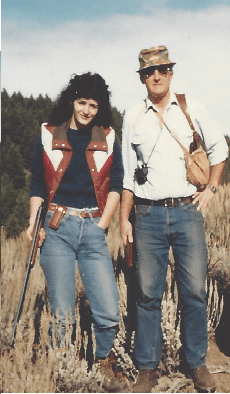
Our old green 1954 Ford Tudor sedan sat squat in the driveway. My parents bought it new from a west coast bootleg dealer before I was born. Most Saturdays when I was young, my mother and older sister dressed up to drive downtown in the Triumph and browse department store racks. They ate lunch in the restaurant on the third floor of the Bon Marche, and returned with shopping bags flaunting tissue paper. Dad loaded my younger brother and me into the old green Ford, a shotgun or a rifle, and we drove out of town. Dad joked: Henry VIII was a Tudor; Joan of Arc was a wonder. Barney always came along, our fox-red Labrador, even if, sometimes, he rode in the trunk.

Saturdays I learned to scramble along reeds and brambles bordering the river, pry out  gray stones impressed in the bank to plunk into the current, how to keep moving when the viscous mud fronting the lake sucked to the ankles of my black rubber boots. I studied how to ease through these places, to watch and be still, when to wait, like any wild thing. I learned to trust what the dog told me.

–Excerpt from “Birds the Color of Water”

1982_dadandme

Happy Father’s Day Dad.


Gold Dust Monsoon

dragon_jail
Dragon Jail

Mercy and I walked down to the river kicking drifts of cottonwood fluff along the trail. In the long thick grass the dog seized sneezing when we crossed a field to strike the southern path to the old boat landing.  She swam after sticks in the green water fresh with snow melt to wash away the pollen. I held a stick underwater for her to dive down to retrieve and rinse the grit from her eyes and nose.  She dashed along the sandbar in loops and didn’t want to be leashed to walk back.

It happens every year, this river of grass seed pollen flowing down from mid-valley, cottonwood tufts like trout swimming south at dusk. Everyone is angry it seems, caught in a riptide gold dust monsoon and flailing out to sea. There’s nothing for it but sleep and showers swimming sideways. Everyone is angry.

I don’t need to buy groceries for the neighbors any more, Shirley said. She’s in hospice care at home. Vic just got released from the hospital after four days. There is traffic up on our hill now with traffic jams when more visitors or the mail truck arrives. Mercy and I still check Vic and Shirley’s gates every morning and I wonder if I can bear it.

Repost – June 2017

This morning my neighbor came out in her nightdress to water flowers in the brick planter fronting her steps. I try not to notice and sit very still. The sun is breaking over the hill and filtering through the birch leaves. I think I am a tabby cat, mottled and camouflaged, in the dappled light. I don’t have a nightdress to wear out into the morning.

It goes to the head, this golden haze of pollen and drifting cottonwood. It’s fairy dust. The trees and grass release their magic as the day grows, to be caught in the wind and blow south. Some afternoons, especially near the river, it seems it’s snowing. My eyes itch with it. People sneeze and scratch. They try antihistamines which only makes them thirsty and angry. It’s easier to try to think in the morning. Later in the afternoon, there’s a full lulling need to sleep, to drift into some new fairy tale, succumb to the spell cast by the gold dust.

june_river

Thistledown

artichoke

“It doesn’t matter what you do, so long as you change something from the way it was before you touched it into something that’s like you after you take your hands away. The difference between the man who just cuts lawns and a real gardener is in the touching. The lawn-cutter might just as well not have been there at all; the gardener will be there a lifetime.”

–Ray Bradbury

“It doesn’t matter what you do, it matters that you do,”

–Me, to my teenage son

Walking out on the hill in the rain this morning  into that sweet earthly scent of rain on dry grass–petrichor, the blood of the old gods falling on stone–to shrug off the hood and let the drops burnish my hair.

Since the deluge in April, there was little rain, not the soaking female rain of spring that trickles to the root. Days have been warm and mornings spent carrying water in cans and hoses, swearing at sprinkler heads with stripped threads and leaking faucets forgotten in October, sprinkling, spraying, misting, playing the rainbow in the arc of falling water.

Zucchini seeds burst above ground yesterday, waiting until I was distracted, between morning watering and evening’s final tour. There are globes forming on the artichokes that are still small as thimbles. I let the thistledown bloom lavender blue and invite the bees to a buffet. The plums are red and hard as olives.

I gleaned wild asparagus with Grandma from the banks of irrigation ditches and pastures when I was a child, keeping a wary eye out for a bull or vexed mule. No two spears were the same shape, size, or color, as they are cultivated now. Some were thick and squat and purple; others willowy and pale green, with an occasional natural albino, a bouquet of spring phalli jutting from earth into the light.

Local asparagus is coming in season and to market, tender and firm (however disappointing in uniformity.) I buy a braces of it, while it lasts, to saute simply in a splash of stock and butter, a drop of white wine, and a drizzle of maple syrup, simmering off the liquid and shaking the pan to finish with a blister. The cure is always growing nearby.