Parsley and Pine Nuts

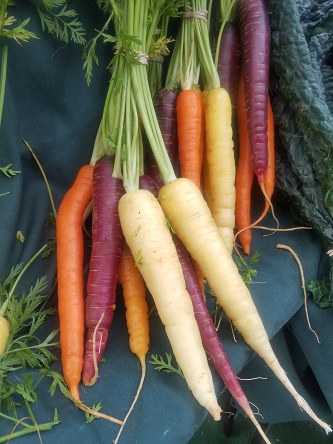
carrots.png

The kitchen is buttery with pine nuts, pignolia, seeds shaken from pine cone. As they toasted I stooped to watch through the little oven window, yet finally judged them brown from scent rather than sight. These are not the longer oval nuts from the Mediterranean which are even more expensive and difficult to find. These are round and squat, from Asia. They will do. I mostly use pecans now, except for this.

Last night the neighbors celebrated Passover Sedar with the children playing on the hill and out in the street before sunset. Today is Easter.

Orthodox Easter, Pascha, is another week away, as the date must fall after Passover. Easter eggs are dyed blood-red in Greece with dye derived from onion skins. People play a game knocking eggs together, as they knock they say “Christos Anesti,” and the response comes “Alithos Anesti.” The person with the last uncracked egg receives blessings and luck for the coming year.

The pine nuts cool on the counter. I bloom the Greek oregano and thyme in olive oil for a minute before adding the chopped onion to the pan. Mom didn’t make spanakopita, though Toula did. She’d bring over a basket of the pastries filled with spinach and feta on holidays. Mom made baklava and kreatopita, tucking the filo sleeve under a damp dishtowel as she brushed the leaves and stacked them, pushing the hair back from her forehead with a wrist. I julienne a gallon of spinach leaves and two handfuls of parsley to wilt with the onion and temper the greens with nutmeg.

Eostre was an Anglo-Saxon goddess of fertility. Once she healed a wounded bird by changing it into a hare. The grateful rabbit brought her eggs that she still laid despite her metamorphosis.

spanakopita.png


Joyas Voladoras

blueberry_bells

“It’s expensive to fly. You burn out. You fry the machine. You melt the engine. Every creature on earth has approximately two billion heartbeats to spend in a lifetime. You can spend them slowly, like a tortoise and live to be two hundred years old, or you can spend them fast, like a hummingbird, and live to be two years old.”

–Brian Doyle, “Joyas Voladoras,” The American Scholar

Brian Doyle was an essayist, novelist and editor of Portland Magazine. Some dozen years ago while working as a software analyst and project manager, I submitted a piece to the Oregon Quarterly‘s annual essay contest. My essay was selected as one of ten finalists with Doyle as the final judge. Finalists were invited to an afternoon’s conversation at the University of Oregon campus followed by a public reading that evening.

I accepted the invitation. Doyle reviewed each essay during that afternoon. When he came to mine, he looked up over his glasses across the table. “What can I say. This is a mess. It’s beautiful, but it’s a mess. Maybe you’re a poet.” He moved on to the next essay in the stack. I didn’t attend the public reading.

Brian Doyle died of brain cancer in 2017. The Oregon Quarterly no longer holds an essay contest, reinventing itself as an arm of the university’s marketing department. I went back to writing project plans and business cases for ten years until I wrote them all.

“A hummingbird’s heart is a lot of the hummingbird. Joyas voladoras, flying jewels, the first white explorers in the Americas called them, and the white men had never seen such creatures, for hummingbirds came into the world only in the Americas.”

–ibid

The moon is full tonight, again. The dog inside barking at the moon sinking in the west early this morning. Moon-keeping time signals spring Easter and Passover holidays when she waxes full after equinox, marking Ramadan and Asian New Year when she is dark and new. The first red dogwood bracts unfurl outside the window.

I rediscovered new black ballet slippers I bought on sale in October and tucked away for now, this spring moment. I forgot them in the snow. I washed the fleece sweats and folded them (I considered giving it all away as though I’d never need fleece again.) When I brought the neighbors their groceries, they showed me a tiny Calliope hummingbird at the feeder outside the kitchen, the smallest bird in North America. It weighs as much as a ping-pong ball.

Time curves upward and hangs a heartbeat before descending. There a comes a place, recognized only in retrospect, where the arc plays out to fall, when thoughts bend toward memory over hope, wistfulness over desire.

“You can brick up your heart as stout and tight and hard and cold and impregnable as you possibly can and down it comes in an instant, felled by a woman’s second glance, a child’s apple breath, the shatter of glass in the road, the words I have something to tell you.


Pineapple Express

ben_II
Ben

Atmospheric rivers are relatively long, narrow regions in the atmosphere – like rivers in the sky – that transport most of the water vapor outside of the tropics. These columns of vapor move with the weather carrying an amount of water equivalent to the average flow at the mouth of the Mississippi River.

https://www.noaa.gov/stories/what-are-atmospheric-rivers

The Pineapple Express blew into northern California and Oregon seven inches ago, tepid and drenched, rain dropping like coconuts, a whiff of the tropical between shower curtains, precursor to that dank cannabis strain smacking of fresh apple and mango, with a taste of pineapple, pine, and cedar, namesake of the river in the sky. It’s tepid rain, night and day, relentless. Mercy doesn’t mind venturing out to roll in the puddles so much as I swelter in a zipped rain jacket while rain from the islands streams over my lips. Flood warnings are in effect for the Siuslaw, coast fork of the Willamette, and the Mohawk.

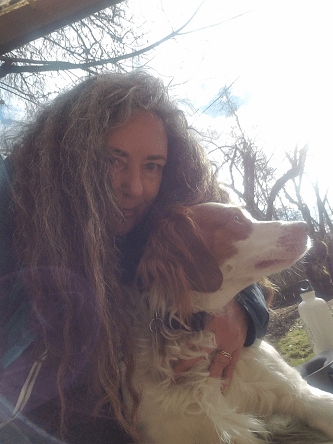
Ben, the crazy copper Brittany Dad rescued a year ago, lived to see his second birthday only by sheer red chance of mischief and puckish soul, for such are the whims of the dog daemons favoring the foolhardy.

Ben climbs ten feet into a tree following squirrel scent and bails out again when the trail plays out, straight down, diving like a sockeye. He escapes through a breath between wooden planks to parade through the old neighborhood, weaving across streets oblivious as a carnival reveler to cars, cops, and guns. For blessed are the ginger and the rufous, ragged cheerful children of Pan, to see another spring.

Knock on wood.

selfie_with_ben
Storm Selfie


By Gemini

red_quince
Red Quince

“We are not committed to this or that. We are committed to the nothing-in-between…whether we know it or not.”

–John Cage

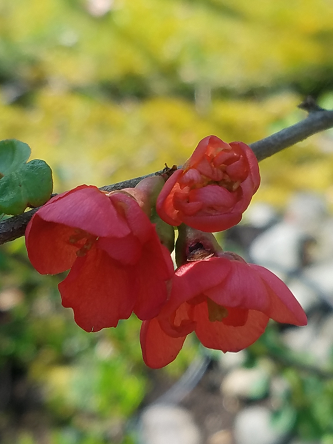
There was thunder yesterday, hail. Rain beat down in sheets to flood the grass and gutters. I was driving along the parkway like a fool. Today the sky breaks blue and clouds scale the butte like dragons, slippery and serpentine, some white, others black, mostly grey. They lick the face of the hills climbing down or move along the ridge and it’s spring suddenly with grass thick from snow melt, daffodils and grape hyacinth, and everywhere the scent of blooming plum.

Grandma said thunder was the sound of dwarfs playing bowls inside the mountain. She said if the sky had a patch of blue big enough to make a Dutch man a pair of pants, it wouldn’t rain.

When she swore, it was by the twins, Castor and Pollux. I had two theories about this as a child: one, that she was referring to my Grandfather “Jimmy” or; two, Grandma was invoking Jiminy Cricket from Pinocchio. However, in any instance, the “J” was softened to a long “Y” for reasons I didn’t comprehend and she shook her fist with more determination than damnation.  It was many years before I discovered that she was swearing by Gemini, the Dioscuri, an ancient oath adopted in some sublime fashion I cannot explain, yet find delightful.

When we walked together, she pointed out different plants and told me their names. They all looked alike to me, all green, as things do to a child.

sky_flowers
Sky Flowers


Pear and Pine

pear_and_pine

The snow is gone, even the last gritty floes in the grocery store parking lot, though sorting is long. It will take more time. Wood chippers chew in the hills, shredding up branches and limbs. Wild cat sawyers pull dented trucks to the curb and wrestle chunked rounds from the medians into their pickup beds to haul home and split, cure, and sell.

The night before the scots pine was hauled up the hill off the shattered back fence, I dreamed of a crocodile—the pebbled bark rough like a reptile’s hide. I realize this only when the trunk is sawed down to stove lengths and the crew of lean young men come for approval.

Pear blossoms lace through pine boughs. Mercy and I take the long way around returning from the park and I pause to look at this strange co-mingling. I make the dog stand while I breathe in mixed flower and pitch at the corner, wave my hand along the starry branches to descry a reason. Snow levered the pine’s roots from the ground and the tree fell to its knees against the neighboring pear. There are different types of pine, as there are many different sorts of pears: lodgepole, ponderosa, western white, sugar; each pine is known by its needles and fruit. Western white, I think, but Mercy is unimpressed and takes the lead in her mouth to nudge me up the hill and home.

The pine will be logged. The pear might survive. The little brown bats are out at dusk. A rufous hummingbird, bright as a new copper penny, appeared outside the window.


Doubt

cuttings_kitchen_sink

Stems from the beheaded hazel crown, stems from the nearly-bloomed rosemary, are salvage from what was smothered and crushed in the snow storm two weeks ago. I scraped the stems to encourage new roots to reach down and taste the water. The cuttings stand in jars behind the kitchen sink beside last year’s salvaged hydrangea. Tree trimmers are coming soon to cut the downed Scots Pine into firewood lengths.

I responded to Sonora Review’s current call for submissions a week or so ago while snow lingered on the hill and froze into ice each morning. Their next issue seeks work related to “doubt.” The snow is nearly gone now, except for the receding mounds on the lawn heaped up from shoveling the road. An essay, I suppose, though simply prose submission is a simpler term allowing the essay to serve as verb:

Essay: verb: synonyms:  attempt, make an attempt at, try, strive, aim, venture, endeavor, seek, set out, do one’s best, do all one can, do one’s utmost, make an effort, make every effort, spare no effort, give one’s all, take it on oneself

Here is Charles D’Ambrosio in the preface of his new and collected essays, Loitering, describing the elusive nature of the form, when prose is crafted not as information, article, argument or coursework, but something else–a portfolio of inquiry:

“Voice holding steady in the face of doubt, the flawed man revealing his flaws, the outspoken woman simply saying, the brother and the sister—for essays were never a father to me, nor a mother. Essays were the work of equals, confiding, uncertain, solitary, free, and even the best of them had an unfinished feel, a tentative note, that made them approachable. A good essay seemed to question itself in a way that a novel or short story did not—or perhaps it was simply that the personal essay left its questions on the page, there for everyone to see…an attempt whose outcome wasn’t assured.”


Born for This

snow_shrouded_butte

Vic is shoveling snow off his driveway with a flat half-spade. There are soft trailing footprints where Mercy and I climbed the slope to deliver white bean and chicken soup and take away a bag of trash to the street. We put the bins out for collection Sunday night as snow started to fall and stick. I knocked a foot of snow off the bins with the snow shovel, twice. The snow on the hill is up to Mercy’s belly and my knees. I’m keeping an eye on Vic through the front windows as I write. Vic is 89. He doesn’t want any help.

Vic’s red plaid Pendleton is tucked into khakis hitched up to his lower ribs. When the sun came out after the latest flurries, he leaned against the garage and unzipped his coat. He slices at the top of the snow with the spade and lets it slip off to the growing pile on the side. Looking south to the Butte, he stops and rests, bowed with both gloved hands on the handle of the shovel. Twice I nearly pulled my boots back on to go out to help and then stopped. He refused my help twice already.

mercy_snowplay

Monday morning there was a foot of snow. Mercy was out back barking before daylight, baying at snow drifts. My phone starting pinging with incoming text messages. The power went out at ten o’clock, yet I had enough presence of mind to brew extra coffee and fill every thermos from the top cupboard with hot water before it went. We lit a fire and set up the camp stove under a sheltered eave. I pulled on my gear and took the dog out back to dig the gate free while she capered and plowed through the powder.

Small trees, herbs and shrubs, my beloved curling hazel, all snapped and broke under the weight of the first fall. Fallen cedar limbs yawn like leviathan bones jutting from the snow. A 30-foot scotch pine toppled in the back and took out a section of fence. Fir trees cracked in the middle distance. An electrical transformer flashed and exploded farther away. Another ten inches of snow fell. Shy yearlings lurk down the hill behind tree trunks watching the dog tunnel in the snow. Deer mice crept in during the night to scoop frozen drippings from a corner of the grill pan.

Mercy danced.

The main roads are plowed now. The power is back. The sun was out briefly before it freezes tonight. Our hillside spur road needs to melt more to drive down; even in the Outback there is not enough clearance to negotiate the grade. Shirley was referred to an oncologist and has her first appointment tomorrow morning. She thought she’d try to walk down the hill to meet her son where the roads are cleared. I shook my head and suggested alternatives. Shirley is 81.

The patient advocate at the cancer clinic is sending transportation for the appointment, a chained high-profile vehicle with a chance of climbing.

Shirley doesn’t think Vic will be able to travel with her, although he desperately wants to go.

Blue Iris

tiny_iris

Tiny blue iris surface among the dead leaves.

Just when it seems like a corner, the horizon flattens out, far flung to the line of sight, so far the pavement shivers, and it’s always been this, this winter hex, summer just a myth we share to keep us believing–I never walked barefoot over pink daisies in the lawn and there’s never been spotted fawns sparring on the hill, and my hands will never be warm again. I wonder if it’s August in South Africa and Australia. If yes, please write.

I flinch with every chime from my phone when it’s another advertisement for thumb drives in primary colors that I don’t want, although I’m not sure what I want exactly, just nothing that can be bought. February is one long damn month for the shortest one: Valentine displays are dismantled and lonely hearts lumped in sale bins marked down for quick sale. The full snow moon passed over but she’s still digging in her nails and not letting go. Rain rages down shooting ice pellets. I’m tired of this story.

Tiny blue iris surface among the dead leaves. I had to go down on my knees to sweep them free.

Praying

It doesn’t have to be
the blue iris, it could be
weeds in a vacant lot, or a few
small stones; just
pay attention, then patch

a few words together and don’t try
to make them elaborate, this isn’t
a contest but the doorway

into thanks, and a silence in which
another voice may speak.

–Mary Oliver


Ephemeris

ephemeris

The cold front passed over dropping a burden of snow to the north, smothering Seattle and snarling Portland. There were flurries and skiffs here. The Butte frosted down to the timberline. In gray fleece and white wool like the storm clouds, a pine-colored coat among the dark trees, I walked the dog down to the frozen field in the park. Clouds bloomed and swirled around the creek valley while we pivoted in the eye, the snow threatened and refrained, dizzy with the rising dash of it all surrounding us.

Mercy found a rubber ball under a bush. A lame man with an old dog joined us turning under the spiraling clouds. There was no one else in the park. Last summer he shot himself in the right leg and left ankle while cleaning his Glock. He carried a walking stick and leaned hard on it as we talked. Someday he would return to Baja and surf again. The bullet sheared a screw in his ankle from a previous injury. He was waiting for another surgery. We shared the names of our dogs, but not our own. His dog’s name was Beau. I threw the ball for Mercy as Beau looked on.

There’s a flood watch, bellowing gusts. Rain tattoos the glass. I have a book of days. It’s titled “New American Ephemeris for the 21st Century.” Such books were once used for celestial observation and navigation. Software probably has made them obsolete. Inside the book are tables listing each day of the century, line-by-line as day-by-day, with precise degrees and angles of the planets, the moon phases and eclipses.

The Greek word ephēmeros means that which lasts only one day–a mayfly, a snow flurry, or a newspaper. At times I take the book down from the shelf and open to some random future year, 2077 perhaps. I construct a mental orrery, a model of the solar system, with planets revolving from the data in the tables. I will not live so long, without doubt, to see 2077. It is a singular solace of mathematics and imagination to glimpse a future Harvest Moon.